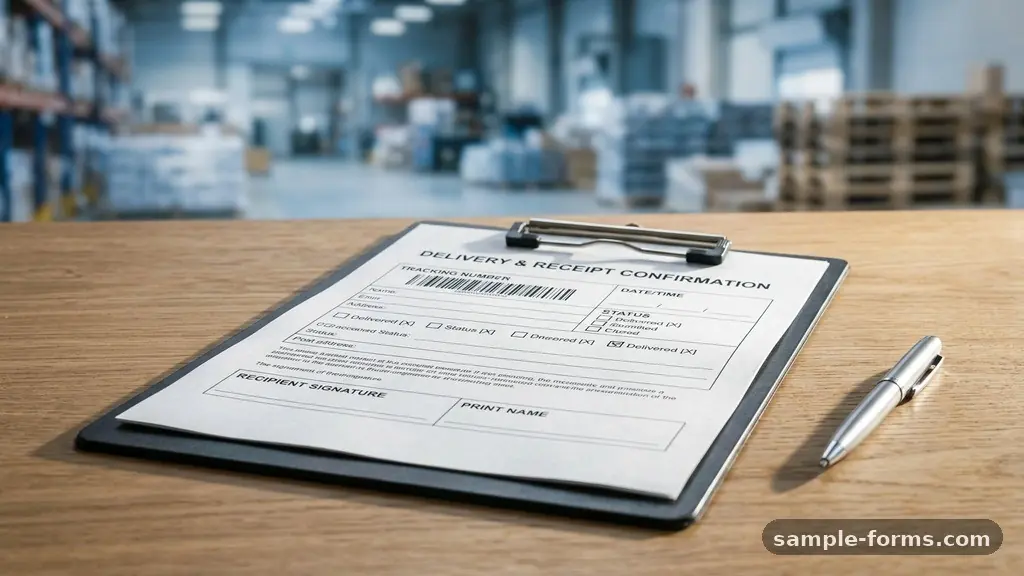
Managing the flow of goods requires precision, and a well-structured delivery confirmation form ensures every transaction is accounted for accurately. By capturing specific data points at the moment of handover, businesses can resolve disputes, improve inventory accuracy, and maintain a clear chain of custody.
This article outlines the essential fields and verification steps required to turn a simple receipt into a powerful piece of logistics documentation. Whether you are running a small e-commerce shop or managing a complex supply chain, understanding exactly which details to record will save you time and protect your bottom line during every shipment cycle.
Core Data Points for Every Shipment
The foundation of any reliable tracking process is the consistency of the information collected. When a package leaves your facility, you need more than just a destination address to ensure it arrives safely. You must record unique identifiers that link the physical box to your digital records, creating a trail that holds up under scrutiny.
Start with the carrier identification and the corresponding tracking number. These two elements act as the primary keys in your database, allowing you to query the status of any parcel in real time. Without these, you are essentially flying blind if a customer calls to inquire about a late arrival.
Next, prioritize the delivery timestamp. While automated systems often generate this, manual verification on a paper form or digital app serves as a critical backup. Knowing exactly when the handover occurred helps distinguish between a late departure from your warehouse and a delay caused by the carrier.
Verifying Recipient Information
A delivery is only as successful as the person receiving it. Recording the details of the consignee ensures that the item reached the intended party rather than being left at a doorstep or with an unauthorized neighbor. This is particularly important for high-value items where liability is significant.
Always secure a legible consignee signature whenever possible. Digital pads have become standard, but if you are using a physical form, ensure the signature matches the name of the person authorized to receive the goods. A signature creates a binding legal acknowledgement that the shipment arrived in the state described in your manifest.
For business-to-business transactions, include the department or name of the receiving agent. This level of detail aids in internal inventory reconciliation later on. If a package goes missing inside a large office building, knowing exactly who signed for it can pinpoint the internal breakdown immediately.
Managing Documentation and Manifests
Every shipment should be accompanied by a shipping manifest that details the contents of the container. This document is the bridge between your warehouse picking list and the customer’s final delivery. When the driver arrives, they should cross-reference the physical items with the manifest to ensure nothing was omitted.
It is also wise to attach a copy of the bill of lading to your internal records. This document serves as the contract of carriage and provides a clear description of the goods being transported. If you are shipping freight, this document is non-negotiable for insurance purposes.
Essential Documentation Checklist
- Unique tracking number for every container
- Accurate weight and dimensional data
- Full contact details for the sender and consignee
- Itemized list of contents matching the purchase order
- Signed copy of the bill of lading
- Reference number for the internal sales order
Handling Exceptions and Damages
Not every delivery goes according to plan, and your paperwork must account for these realities. A delivery exception can occur due to weather, mechanical failures, or incorrect routing. Your form should have a dedicated section to document these events as they unfold.
If a package arrives with visible signs of mishandling, the recipient must complete a shipment damage report immediately. Do not wait until the next day to assess the situation. Take photos, record the condition of the exterior packaging, and have the driver note the issue on their handheld device or your paper form.
This immediate documentation is vital for freight audit processes. Insurance companies and carriers require proof that the damage happened while the item was in their care. Without a contemporaneous report, you may find it impossible to recover the cost of the damaged goods.
Leveraging Modern Tracking Technology
Manual logs are useful, but they should be supplemented by digital tools. Modern logistics software often integrates GPS coordinates with the final proof of delivery. This provides visual evidence that the driver was at the correct location when the package was scanned.
Using a Federal Trade Commission guide on consumer protection can help you understand the legal obligations regarding delivery and customer rights. Being transparent about how you track items builds trust with your clients. When customers see that you have a rigorous process, they feel more confident in your services.
Comparing Tracking Methods
| Method | Precision | Data Retention | Speed |
|---|---|---|---|
| Paper Forms | Low | Physical Storage | Slow |
| Digital Scanning | High | Cloud-Based | Instant |
| GPS Geofencing | Highest | Automated | Instant |
Ensuring Data Integrity and Security
The information you collect is sensitive. It contains names, addresses, and sometimes details about the contents of the shipments. You must ensure that your delivery confirmation form is stored in a secure environment, whether that is a locked cabinet or an encrypted server.
Regular inventory reconciliation is the best way to verify that your records are accurate. Compare your internal shipping logs against the invoices sent to customers. If a discrepancy arises, you will have the documentation ready to perform a root-cause analysis.
Data integrity also means training your staff on how to fill out these forms correctly. A sloppy signature or an illegible tracking number is useless when you need to prove a delivery occurred. Make standardized forms mandatory and hold periodic reviews to ensure compliance.
The Role of Chain of Custody
Every point of transfer in the supply chain represents a potential vulnerability. From the moment the package leaves your loading dock to the final arrival at the customer’s door, someone is responsible for it. A robust chain of custody ensures there is no gap in accountability.
Include fields for the courier’s ID and the time of pickup on your form. If an item is transferred between multiple carriers, ensure each transfer point is signed off by both parties. This creates a clear timeline that you can trace if a shipment goes missing.
When you maintain this level of detail, you transform your logistics from a cost center into a competitive advantage. Customers appreciate knowing exactly when and how their goods are handled. It reduces their anxiety and limits the number of “where is my order” inquiries your support team has to field.
Frequently Asked Questions
What information is mandatory on a proof of delivery?
At a minimum, you must include the tracking number, the delivery timestamp, the recipient’s name or signature, and the carrier’s identification. These four elements provide the basic legal and logistical proof that a transfer of possession has occurred.
How long should I keep a delivery confirmation form?
Most businesses retain these records for at least one to three years, depending on their industry and local tax regulations. If you deal with high-value goods or international shipping, keep them until the statute of limitations for contract disputes has passed in your jurisdiction.
What should I do if a signature is missing from the record?
If a signature is missing, check if the carrier provided a GPS scan or a photo of the package at the doorstep. If neither is available, reach out to the customer immediately to confirm receipt. If they have not received it, file a claim with the carrier as soon as possible.
Can digital signatures replace physical forms?
Yes, in almost all modern jurisdictions, a digital signature is legally equivalent to a handwritten one. Using digital platforms often increases accuracy because they prevent the submission of incomplete forms by requiring all mandatory fields to be filled before saving.
How does a freight audit benefit my business?
A freight audit ensures that you are only paying for the services you actually received. By comparing your delivery records against carrier invoices, you can catch overcharges, duplicate billings, and missed service guarantees, ultimately reducing your shipping costs significantly.
Establishing Reliable Logistics Processes
Building a consistent system for recording shipment data ensures your business remains resilient against errors and disputes. By standardizing your delivery confirmation form, you provide your team with the tools to resolve issues quickly and keep customers satisfied. Start by reviewing your current documentation process to identify gaps in your data collection.
Once you have a clear picture of what is missing, implement the necessary fields and train your staff on their importance. Consistently tracking these details creates a transparent, professional, and trustworthy operation that stands the test of time. Reach out to your logistics partners to ensure your digital systems are talking to each other, and you will see immediate improvements in your shipping efficiency.