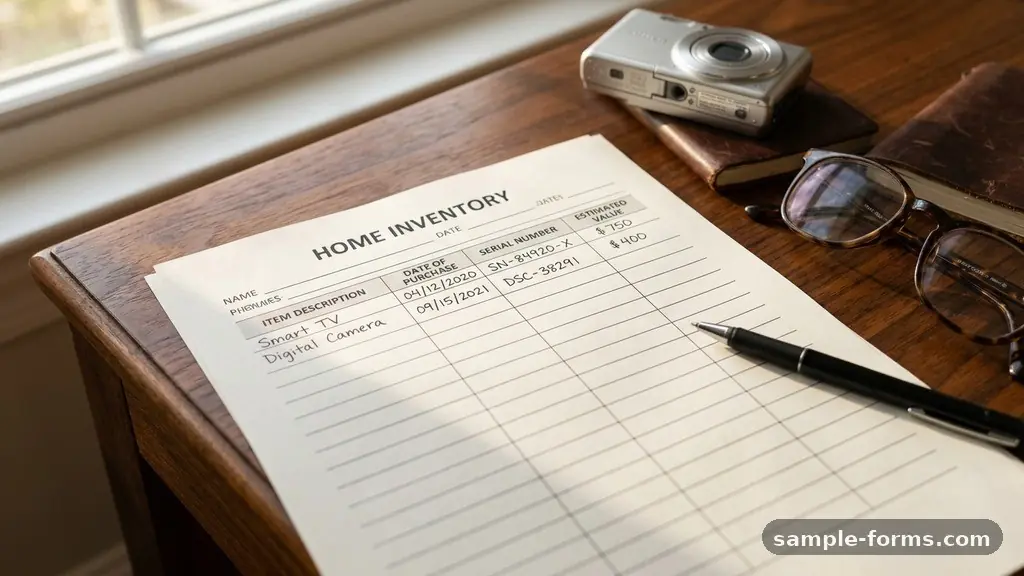
Building a comprehensive record of your possessions is one of the most effective ways to protect your financial future. When you focus on creating a Personal Belongings Inventory Form, you gain a clear picture of your assets while simplifying the claims process for homeowners insurance should the unexpected occur. This proactive approach ensures you are never underinsured during a crisis.
By documenting your items systematically, you transform a daunting task into a manageable project that brings long-term peace of mind. Investing time in this record today prevents significant stress and financial loss later, providing you with a reliable reference point for your household wealth and personal coverage needs.
Getting Started with Your Inventory
The primary goal when creating a Personal Belongings Inventory Form is to capture enough detail to prove ownership and value. Begin by choosing a room-by-room approach to avoid feeling overwhelmed by the sheer volume of items in your home. Start with high-traffic areas like the living room or master bedroom, where you likely keep your most valuable electronics and furniture.
You do not need specialized software to begin. A simple spreadsheet or a dedicated notebook works perfectly well for documenting basic details.
The most important step is simply starting the process rather than waiting for the perfect organizational system to appear. Consistency matters far more than the specific format you choose for your initial draft.
Essential Data Points for Your Records
To make your inventory useful for insurance purposes, you must record specific details for every item of significance. For each entry, include the item description, the date of purchase, and the original cost. This information helps your insurance provider determine the appropriate coverage level for your specific lifestyle.
Focusing on serial numbers is critical for electronics and major appliances. These unique identifiers act as a fingerprint for your property, making it much easier to track stolen or damaged goods. If you lack the original receipts, note the store where you bought the item and the approximate year of acquisition to aid in the valuation process.
- Item name or description
- Manufacturer and model number
- Serial number for electronic devices
- Date of purchase or acquisition
- Estimated current market value
- Location within the home
Capturing Photographic Evidence
Visual documentation is perhaps the most powerful tool in your inventory kit. A high-quality photo or short video clip provides undeniable proof of the condition and existence of your belongings. Walk through your home with your smartphone, opening drawers and closets to reveal the scope of your possessions.
Do not worry about professional lighting or perfect framing. The goal is to capture the item clearly enough that an adjuster can identify it without question.
Ensure you photograph the backs of electronics to capture the model labels and serial numbers in a single frame. This visual record complements your written data and significantly speeds up the verification process.
Managing High-Value Items
Certain possessions require special attention due to their unique nature and higher monetary worth. Items such as fine jewelry, original artwork, or rare collectibles often exceed standard policy limits. You should maintain a separate section in your inventory specifically for these assets to ensure they receive adequate protection.
For these pieces, you should obtain professional appraisal documents whenever possible. These reports provide an objective valuation that carries significant weight with insurance adjusters. If an item is particularly rare, keep the appraisal and any certificates of authenticity in a fireproof safe alongside your primary inventory records.
Understanding Valuation Methods
Your insurance policy likely uses one of two primary methods to determine what it pays out after a loss. Replacement cost value covers the expense of buying a new, comparable item at current market prices. This is generally the preferred choice for homeowners because it helps you restore your standard of living without accounting for depreciation.
Actual cash value, on the other hand, factors in the age and condition of the item. This method results in a lower payout because it accounts for how much an item has worn down over time. Understanding which method your policy uses is vital when calculating how much coverage you actually need for your home.
| Valuation Type | Calculation Basis | Impact on Payout |
|---|---|---|
| Replacement Cost | New item price | Covers full replacement cost |
| Actual Cash Value | Market value minus wear | Often lower than original cost |
| Agreed Value | Stated amount | Fixed payout based on contract |
Utilizing Digital Storage Solutions
Maintaining a physical paper list is risky, as it could be destroyed in the same disaster that damages your home. Modern technology offers superior alternatives for securing your data. Use cloud storage services to keep your inventory accessible from anywhere, ensuring that your records survive even if your physical documents do not.
A digital ledger or a dedicated app allows you to update your list instantly as you acquire new items. Many people find that storing their inventory on a secure, encrypted drive or a private cloud account provides the best balance of accessibility and safety. Always ensure that your files are backed up in at least two different locations to prevent data loss.
Preparing for Disaster Scenarios
Disaster preparedness is the ultimate reason for keeping a thorough inventory. Natural events like floods, fires, or windstorms can cause widespread damage, making it nearly impossible to recall every item you once owned. When you have a pre-existing list, you can focus on your safety and recovery rather than struggling to remember the contents of your basement.
Update your inventory at least once a year or after any major purchase. Significant life events, such as moving to a new home or renovating, are also perfect times to review and refine your list. This regular maintenance ensures that your coverage remains aligned with your current lifestyle and asset profile.
Common Questions About Inventory Forms
How often should I update my inventory?
You should aim to update your records at least annually. Additionally, perform a quick update immediately after purchasing high-value items like computers, jewelry, or expensive appliances to ensure they are covered under your current policy.
Do I need to list every single item in my kitchen?
You do not need to list every fork and spoon, but you should document major appliances and sets of high-end cookware. Focus on items that would be expensive to replace all at once, as these are the ones that affect your financial recovery the most.
What if I don’t have receipts for my older belongings?
Missing receipts are common and usually not a dealbreaker. Use photographs, bank statements, or credit card records to establish that you owned the items. If you have no documentation, a detailed description and estimated age are often sufficient for the claims adjuster to evaluate your claim.
Can I just use a video walk-through?
A video is a great start, but it should not be your only method. While it provides excellent visual evidence, it lacks the specific details like serial numbers and purchase prices that a written list provides. A combination of a written spreadsheet and a video walk-through is the most robust approach to managing your home inventory.
Should I include items stored in a garage or shed?
Absolutely. Any items of value, including lawnmowers, power tools, and sports equipment, should be included in your inventory. These items are often overlooked, yet they represent a significant portion of a household’s total value.
Final Thoughts on Asset Documentation
Taking the time to document your belongings is an act of care for your future self. While the process requires focus, the security it provides during a crisis is invaluable. By creating a Personal Belongings Inventory Form, you gain control over your financial narrative and ensure that your hard-earned assets remain protected against unforeseen circumstances.
Start small by documenting one room this weekend. As you see the list grow, you will likely find the task becomes easier and more rewarding.
Keep your digital copies in a secure, accessible location, and remember to revisit your list annually to keep it current. Your peace of mind is worth the effort, and you will be grateful for your preparation if you ever need to file a claim.