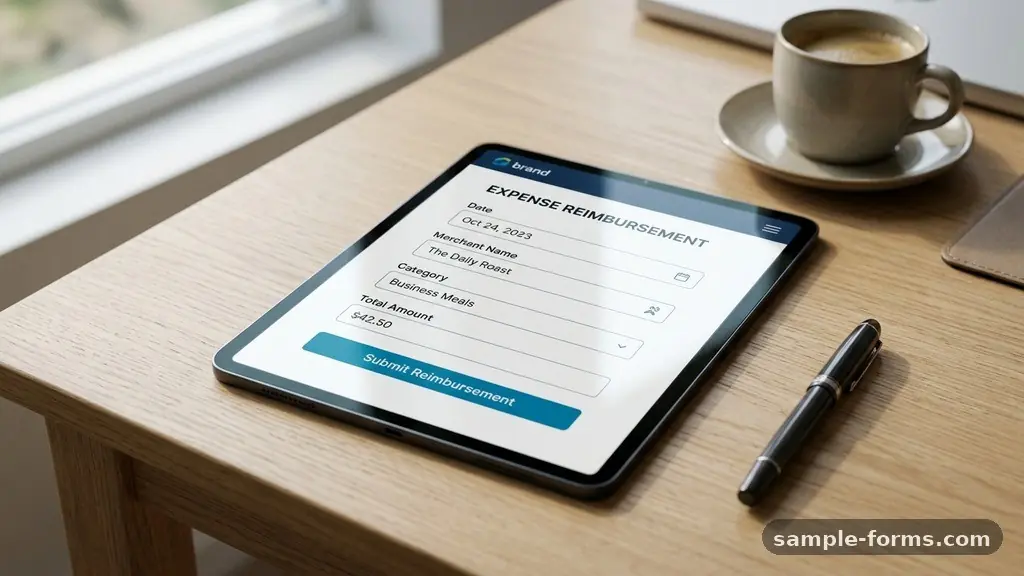
A simple Expense Reimbursement Form: Required Fields Explained is essential for maintaining clarity and trust between employees and their organizations. By using a standardized template, companies ensure that every request for business-related costs is transparent, easy to audit, and compliant with internal financial standards.
Whether you are a small business owner or a manager overseeing a team, understanding these fields helps reduce administrative bottlenecks and speeds up payment disbursement. This breakdown covers exactly what information is necessary to move from a pending request to a successful reimbursement, ensuring that your financial tracking remains accurate and professional throughout the fiscal year.
Core Data Points for Every Submission
Every reimbursement request must start with basic administrative details to ensure the transaction is traceable. Without these identifiers, your accounting department cannot link a specific payout to a person or a project. You should always include the employee’s full name, their unique department code, and the date the request was submitted.
Including a dedicated field for the manager or supervisor is equally vital. This establishes a clear approval workflow, ensuring that the person responsible for the budget is aware of the expenditure. When these basics are missing, the reimbursement process often stalls, creating unnecessary back-and-forth communication between staff and finance teams.
Categorizing Business-Related Costs
Effective expense categorization is the backbone of any healthy financial system. Instead of lumping all costs into a single “miscellaneous” bucket, you should provide specific categories for common outlays. Common categories include travel, office supplies, client entertainment, and professional development.
Categorization allows the finance team to generate reports that show exactly where company money is going. If you see a spike in travel costs, you can investigate whether those trips were necessary or if they fell within the established guidelines. This level of granular data is what turns a simple form into a powerful tool for cost management.
The Importance of Receipt Documentation
Receipt documentation is the most critical component of any request. Without a digital scan or a physical copy of the receipt, the company has no proof that the transaction actually occurred. Most organizations require the date, the merchant name, and the total amount to be clearly visible on the document.
You should remind employees that a credit card statement alone is rarely sufficient. A statement shows that a transaction occurred, but it doesn’t provide the itemized list required for tax-deductible expenses. By enforcing strict receipt submission, you protect the company during audits and ensure that all expenses are legitimate business costs.
Handling Mileage and Per Diem
Mileage tracking and per diem payments often require their own dedicated sections on a form. Unlike standard purchases, mileage is typically reimbursed at a fixed rate per mile, such as the standard rate set by the Internal Revenue Service. Employees must log their starting point, their destination, and the total miles driven to justify these claims.
Per diem payments are even more specific, as they cover daily allowances for meals and incidentals during business travel. Because these are flat rates based on location rather than actual receipts, they require clear documentation of the dates and the specific travel policy under which they are being claimed. Including these fields prevents confusion over whether the employee is seeking a flat allowance or a refund for actual spending.
Alignment with Business Travel Policy
A well-structured form serves as a reminder of the company’s business travel policy. You can include a small checkbox or a signature line where the employee confirms that their expenses adhere to the company’s guidelines. This simple step creates a psychological barrier against overspending and ensures that everyone follows the same set of rules.
If your policy limits hotel rates to a specific dollar amount or restricts certain types of airfare, the form should ideally reflect these constraints. By embedding these policy guardrails into the reimbursement process, you reduce the likelihood of disputes. It shifts the burden of compliance to the moment the expense is incurred, rather than the moment it is reviewed.
Integration with Accounting Software
Modern businesses rarely process forms by hand. Linking your reimbursement process to your accounting software can save hours of data entry every week. When the fields on your form match the fields in your software—such as the General Ledger code or the project tracking tag—the data flows seamlessly into your financial reports.
This integration reduces human error and speeds up the time it takes to get money back into the employee’s pocket. It also makes it easier to track total spending against a budget in real-time. If you are still using paper forms, moving to a digital format that exports directly into your accounting system is a logical step toward operational efficiency.
Common Fields Included in Reimbursement Forms
To help you organize your documentation, consider the following table which outlines the essential pieces of information required for most standard reimbursements. These fields provide the context necessary for auditors and managers to approve the request without hesitation.
| Field Name | Purpose | Why It Matters |
|---|---|---|
| Transaction Date | When the expense occurred | Helps align costs with specific projects |
| Merchant/Vendor Name | Who received the payment | Verifies the legitimacy of the vendor |
| Expense Category | What was purchased | Enables accurate budget forecasting |
| Total Amount | The cost of the item | Determines the payout total |
| Project/Department Code | Which budget to charge | Ensures accurate internal billing |
Standardizing the Submission Process
Consistency across the organization is what makes a reimbursement system reliable. Whether a team is working from a headquarters or remotely, the form should be the same for everyone. This standardization ensures that all employees understand their responsibilities and that no one feels singled out by different rules.
You might want to implement a monthly deadline for all submissions. This allows the finance department to process payments in a single batch, rather than dealing with a constant trickle of requests. Clear timelines also help employees manage their own cash flow, as they know exactly when they can expect their funds to arrive.
Required Information Checklist
When designing or updating your internal templates, ensure that you include these specific requirements. Following a set checklist prevents the frustration of rejected forms and ensures that your financial records remain clean and audit-ready at all times.
- Full legal name of the employee requesting the reimbursement.
- Unique identifier or employee ID number for payroll cross-referencing.
- Clear, itemized receipts for every individual expense over a set threshold.
- A signed declaration that the expenses are for legitimate business purposes.
- Documentation for mileage including start location, end location, and purpose.
- Manager approval signature or digital verification timestamp.
- Correct coding for the specific project or department cost center.
Addressing IRS Compliance
Maintaining IRS compliance is not just about avoiding penalties; it is about ensuring that your business deductions are valid. The tax agency requires that all business-related costs be substantiated with adequate records. If you cannot produce a paper trail for a claimed expense, you may be unable to deduct it, which impacts your final tax liability.
Your form should be designed to capture all the information the IRS would want to see. This includes the business purpose of the expense and the relationship of the people involved. By treating every reimbursement as if it were being prepared for an audit, you build a resilient financial culture that benefits the entire organization.
Frequently Asked Questions
Why is a receipt mandatory for small expenses?
While it may seem tedious for minor items, receipts are mandatory to ensure that the expense is legitimate and to meet tax compliance standards. They provide an audit trail that proves the money was spent on company business rather than personal items, protecting both the employee and the employer from potential misuse.
What should happen if a receipt is lost?
If a receipt is lost, employees should provide a signed statement explaining the nature of the expense, the date, and the reason why the receipt is missing. Most companies have a specific policy for “missing receipt affidavits,” which allow for reimbursement under limited circumstances, provided it does not become a recurring habit.
How long should reimbursement records be kept?
The general recommendation is to retain all financial documentation for at least seven years. This aligns with standard IRS audit windows, ensuring that you have adequate proof of all deductions in the event of an inquiry. Digital storage makes this much easier than keeping physical file cabinets.
Can I reimburse expenses that occurred months ago?
Most corporate reimbursement policies have a strict window for submissions, often 30 to 60 days after the expense is incurred. This ensures that the budget is accurately reflected in the current period and prevents the accumulation of “surprise” costs at the end of the fiscal year.
What is the difference between a per diem and an expense report?
An expense report tracks actual costs against actual receipts, whereas a per diem is a flat daily rate provided to cover expenses without the need for itemized receipts. Per diems are often used for travel to simplify the accounting process, but they must still comply with government-approved rate limits to remain tax-exempt.
Conclusion
Mastering a simple Expense Reimbursement Form: Required Fields Explained is a straightforward way to improve organizational efficiency. By ensuring that every request is clear, categorized, and supported by proper documentation, you reduce the time your finance team spends on administrative tasks. This creates a more positive experience for employees, who get their money faster, and for managers, who gain better visibility into their spending.
Start by reviewing your current forms against the requirements outlined here and look for opportunities to digitize your workflow. Consistent, clear communication about these expectations will go a long way in fostering a professional and transparent work environment for everyone involved.